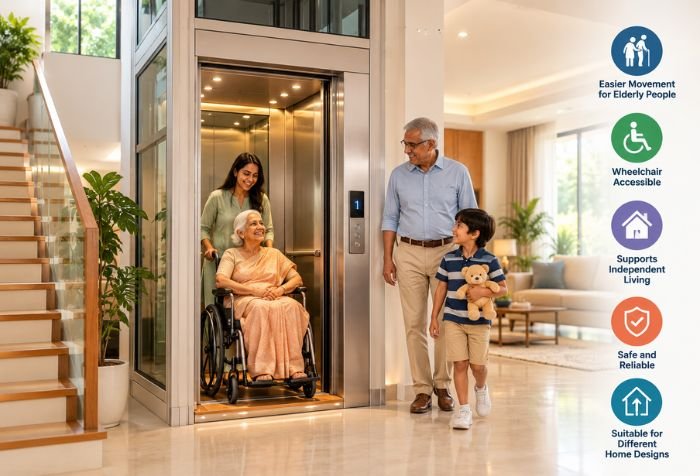
A comfortable home should be easy to access for every member of the family. However, stairs can become a major challenge for elderly people, wheelchair users, and people with limited mobility. Moving between floors may require physical effort and, in some cases, assistance from another person.
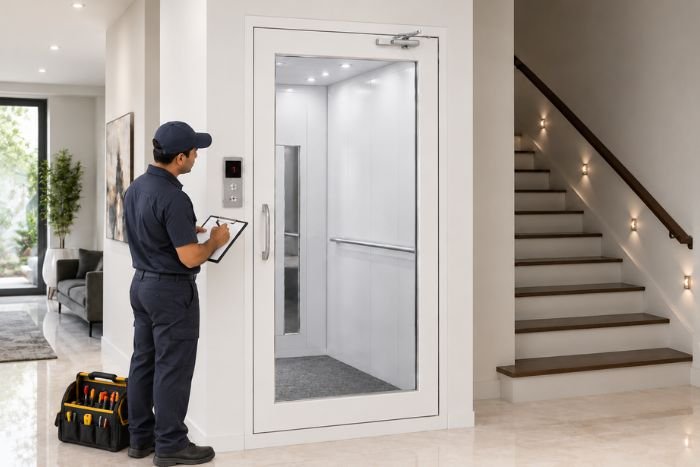
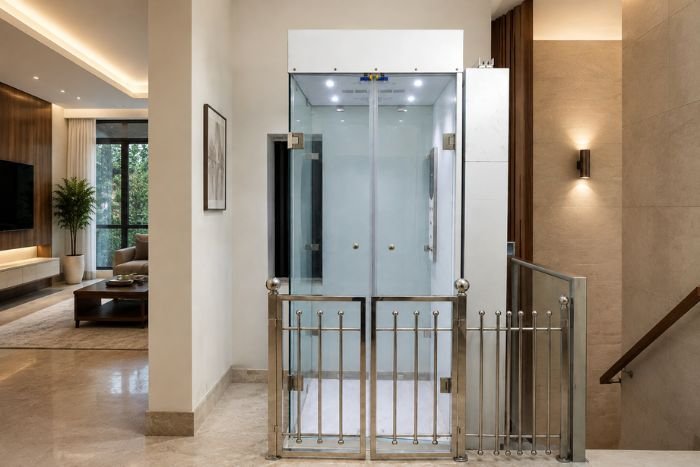
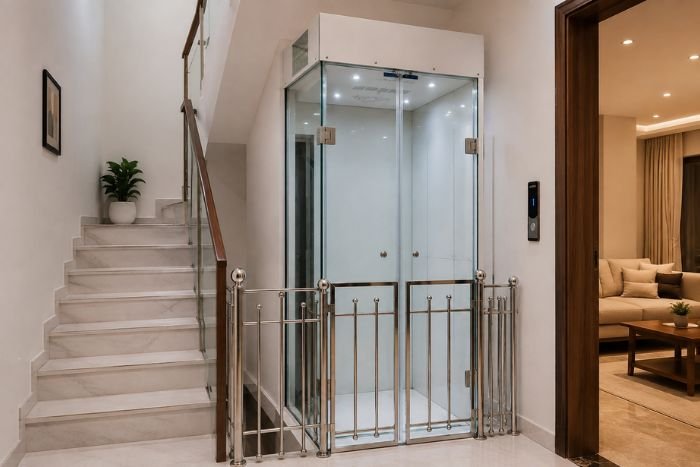
Installing a home lift can make multi-storey homes more accessible by providing convenient vertical movement between floors. Modern residential lifts are designed to combine accessibility, comfort, compact installation, and ease of use.
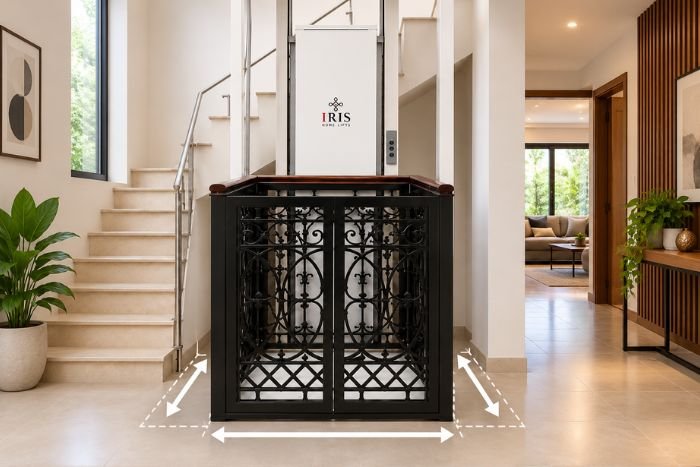
IRIS Home Lifts by Isha Engineering and Co. provides residential lifting solutions for families looking to improve mobility within their homes. With options for different home layouts and accessibility requirements, a home lift can help create a more convenient living environment for people of different ages and mobility levels.
Why Accessibility Matters in Modern Homes
Many houses are designed with bedrooms, kitchens, living areas, terraces, and other essential spaces on different floors. While stairs are suitable for many residents, they may become difficult for people with mobility limitations.
Elderly family members may experience difficulty using stairs repeatedly. Similarly, wheelchair users and people with physical disabilities may require an alternative way to access upper floors.
A residential home lift can connect these areas and make the entire house more usable.
Instead of restricting daily activities to one floor, residents can access different levels of their home more conveniently.
1. Easier Movement Between Floors
The primary benefit of a home lift for elderly people is easier vertical movement.
Climbing stairs several times a day can be tiring, particularly in two- or three-storey homes. A lift provides an alternative way to travel between floors without repeatedly using staircases.
This can be useful for accessing bedrooms, living rooms, terraces, and other areas located on different levels.
For people with limited mobility, easier access can make everyday routines more comfortable.
2. Better Accessibility for Wheelchair Users
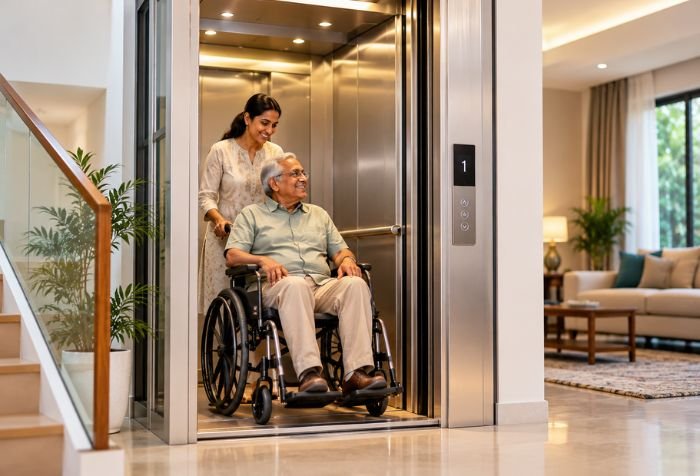
Staircases can create a significant accessibility barrier for wheelchair users.
A properly designed wheelchair-accessible home lift can provide enough space for a wheelchair and allow users to move between floors without transferring to another mobility device.
When selecting a lift for wheelchair accessibility, important considerations include cabin dimensions, entrance width, door configuration, controls, floor-level access, and available installation space.
These requirements should be discussed with the home lift manufacturer during the planning stage.
3. Supports Independent Living
Independence is an important consideration when designing an accessible home.
If a person needs assistance every time they want to move upstairs or downstairs, normal daily activities can become less convenient. A suitable home elevator for seniors can provide easier access between different parts of the house.
Simple operating controls and convenient floor access can allow residents to move around their homes with greater ease.
This makes residential lifts especially valuable for families planning homes that remain practical as mobility needs change over time.
4. Helps Create an Elderly-Friendly Home
Many homeowners now consider ageing-in-place when designing or renovating their houses. This means creating a home that can continue to support residents as they grow older.
A home lift can be an important part of an elderly-friendly house.
Along with features such as anti-slip flooring, handrails, accessible bathrooms, wider doors, and good lighting, a lift can improve movement between floors.
Planning these features early can help families avoid major accessibility modifications later.
5. Reduces Dependence on Staircases
Stairs can be inconvenient for anyone experiencing reduced mobility, whether temporary or long term.
A home lift for disabled people and senior citizens provides an alternative route between floors. This is particularly valuable when frequently used spaces are located on different levels.
For example, a person may need to move from a ground-floor living area to an upstairs bedroom several times each day. A residential lift can make this movement much more convenient.
It can also be helpful when carrying everyday items such as groceries, luggage, or household essentials between floors, provided the lift is used within its specified capacity and intended purpose.
6. Suitable for Different Home Designs
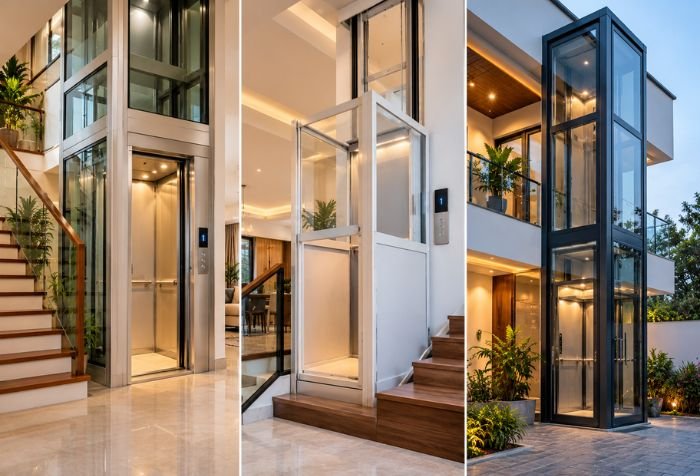
One common concern among homeowners is whether they have enough space to install a lift.
Modern compact home lifts can be designed for different residential layouts. Depending on the building and lift configuration, installation may be possible indoors or outdoors.
IRIS Home Lifts offers customizable options to suit different home requirements, including full cabin and half cabin configurations.
Customization allows homeowners to consider available floor space, travel height, number of floors, entrance position, and overall home design before selecting a solution.
7. Useful for Existing Homes
Home lifts are not limited to newly constructed houses.
In many situations, a residential lift can also be considered during renovation or accessibility upgrades to an existing property. The feasibility will depend on the available space, building structure, required travel height, and selected lift system.
An experienced manufacturer can evaluate the site and recommend an appropriate installation arrangement.
For families with ageing parents or members whose mobility requirements have changed, adding a home lift can help make an existing multi-storey property more accessible.
8. Improves Everyday Convenience for the Whole Family
Although accessibility may be the main reason for installing a lift, other family members can also benefit.
Older adults, wheelchair users, people recovering from temporary mobility limitations, and family members carrying household items may all find vertical movement easier.
A home lift for a two-storey or three-storey house can therefore become part of everyday family life rather than being viewed only as a special accessibility feature.
9. Important Home Lift Safety Features
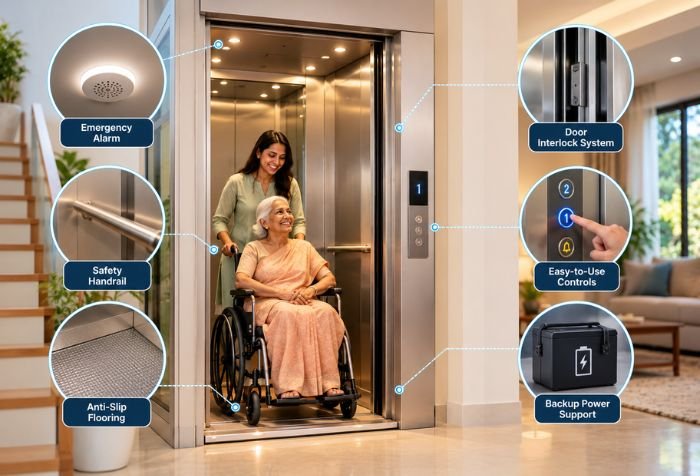
Safety should be carefully evaluated when choosing any residential lift.
Depending on the lift design, important considerations can include emergency controls, door interlocks, backup arrangements, controlled movement, appropriate cabin access, and other protective features.
Homeowners should discuss the available safety systems directly with the manufacturer and ensure the lift is installed, operated, inspected, and maintained according to applicable requirements.
For elderly users in particular, controls should also be conveniently positioned and easy to understand.
10. Adds Long-Term Practical Value to a Home
A home lift can provide long-term value by making a multi-storey house accessible to a wider range of people.
A young family may initially install a lift for convenience, but the same system can become increasingly valuable as family members grow older.
This makes accessibility planning an important part of future-ready home design.
Rather than waiting until stairs become difficult to use, homeowners can consider mobility requirements while building or renovating their property.
How to Choose an Accessible Home Lift
When choosing the best home lift for elderly or disabled people, homeowners should consider several factors:
- Available installation space
- Number of floors
- Required travel height
- Cabin dimensions
- Wheelchair accessibility
- Door opening and entrance width
- Indoor or outdoor installation
- Operating controls
- Safety provisions
- Power requirements
- Maintenance and service support
A site assessment can help determine which configuration is most appropriate for the property.
Why Choose IRIS Home Lifts?
IRIS Home Lifts by Isha Engineering and Co. offers residential lift solutions designed for different home layouts and mobility requirements.
With customizable sizes, full cabin and half cabin options, and solutions for indoor or outdoor installation, IRIS Home Lifts can be considered for homes where accessibility and everyday convenience are priorities.
For families planning a new house or upgrading an existing property, choosing the right home lift can help create a living environment that is easier to access across generations.
Conclusion
A home lift for elderly and disabled people can make a significant difference in how comfortably residents use a multi-storey home. By providing easier access between floors, supporting wheelchair mobility, reducing dependence on staircases, and helping residents maintain greater independence, residential lifts contribute to a more accessible home environment.
The right solution should always be selected according to the user’s mobility needs, available space, building structure, safety requirements, and number of floors.
With IRIS Home Lifts, Isha Engineering and Co. provides customizable residential lifting solutions for homeowners looking to create accessible, convenient, and future-ready homes.