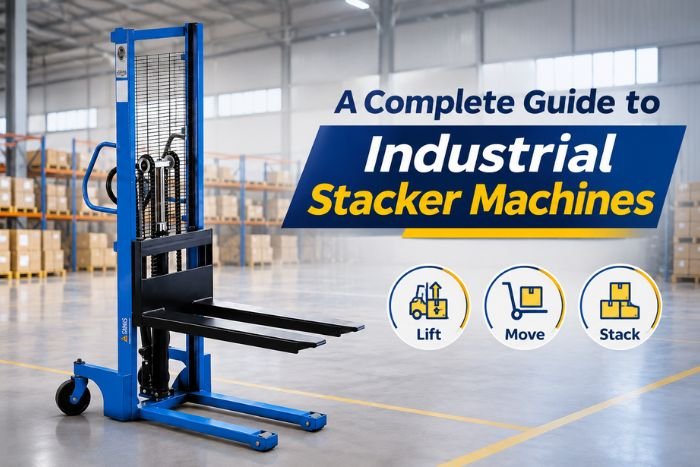
Walk into a busy warehouse, and you’ll notice one thing. Materials are always moving. Some goods need to be unloaded, some need to go onto storage racks, and others must be shifted to the production area.
When this work is done manually, it takes time and physical effort. That’s why many factories and warehouses use Industrial Stacker Machines to make material handling more convenient.
But which stacker is suitable for your business? And what should you check before buying one?
Let’s understand everything in simple terms.
What Is an Industrial Stacker Machine?
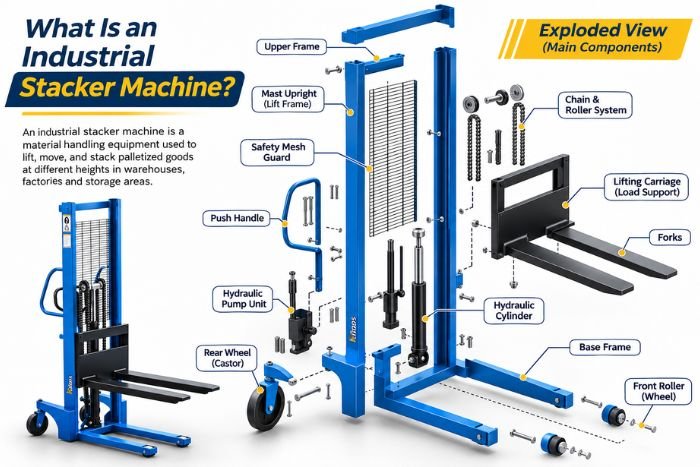
An industrial stacker is material handling equipment used to lift, move, and position loads, usually on pallets, at different heights.
You might have seen these machines in warehouses, manufacturing units, or storage facilities.
Unlike a large forklift, some stacker models are designed for compact spaces and shorter material-handling distances.
For example, if your warehouse has narrow aisles and goods need to be placed on storage racks, a suitable stacker can help workers handle the job more efficiently.
How Does an Industrial Stacker Work?
The working process is quite simple.
First, the operator positions the stacker near the pallet or material. The forks are placed underneath the load, and the lifting mechanism raises it to the required height.
Once the load is lifted, it can be moved or positioned according to the machine’s operating instructions.
Depending on the model, lifting may be manual, hydraulic, or electrically powered.
The important thing is to use the stacker only within its rated capacity and intended working conditions.
Different Types of Industrial Stackers
Not all stackers are designed for the same work. Here are some commonly used types.
Manual Stacker
A manual stacker is operated using human effort, usually through a hydraulic pumping mechanism.
It can be useful for smaller warehouses where lifting work is occasional and loads are within the machine’s rated capacity.
Semi-Electric Stacker
In a semi-electric stacker, the lifting function is powered electrically, while movement may still require manual effort.
This option can be practical for businesses that handle materials regularly but don’t require fully powered movement.
Fully Electric Stacker
A fully electric stacker uses electrical power for lifting and travel.
It may be suitable for warehouses with frequent material movement, depending on floor conditions, load requirements, and operating space.
Customized Industrial Stacker
Sometimes, standard equipment may not match a factory’s requirements.
For example, a manufacturing unit may need a particular lifting height, fork arrangement, or platform configuration.
In such situations, a customized stacker can be considered.
Where Are Industrial Stackers Used?
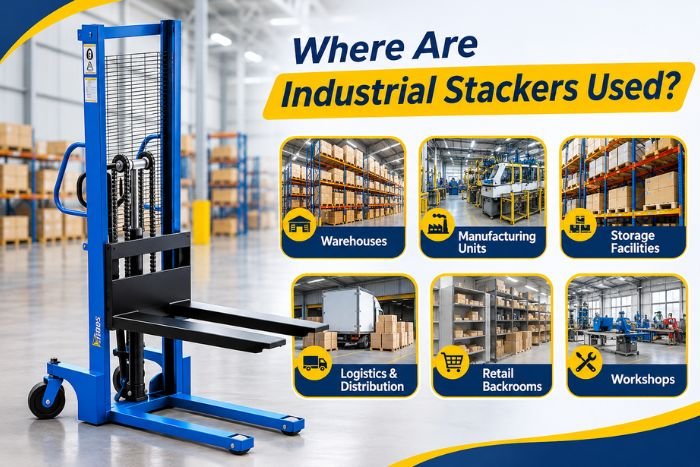
Industrial stackers are useful in many workplaces.
Warehouses: For lifting pallets and arranging goods on storage racks.
Manufacturing Units: For moving raw materials and finished components between work areas.
Packaging Industries: For handling packed cartons and palletized products.
Engineering Workshops: For positioning suitable machine parts and materials.
Distribution Centres: For organizing goods before dispatch.
The exact application depends on the stacker’s design, capacity, and operating environment.
Benefits of Using an Industrial Stacker Machine
1. Makes Material Handling Easier
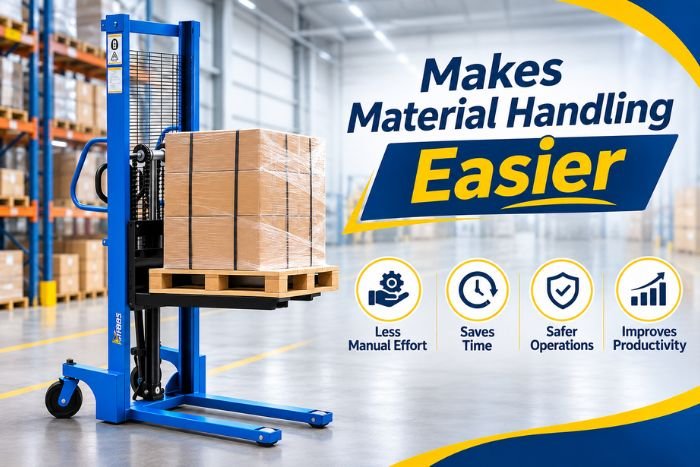
Moving heavy pallets manually is difficult and can involve unnecessary physical strain.
A suitable industrial stacker helps workers lift and position loads with less manual lifting effort.
2. Helps Save Working Time
Imagine a warehouse where workers regularly need to move pallets onto storage racks.
Using suitable lifting equipment can make these repeated tasks more convenient and help maintain a smoother workflow.
3. Useful for Limited Spaces
Not every warehouse has wide aisles or enough room for large material-handling vehicles.
Certain stacker models are compact and can operate in relatively restricted areas, provided there is adequate clearance.
4. Supports Better Storage Arrangement
When goods are arranged properly, workers can locate and handle materials more easily.
A stacker helps position suitable loads at different storage heights, making better use of available rack space.
5. Supports Safer Material Movement
Using the right equipment can reduce unnecessary manual lifting.
However, safe operation still depends on proper training, load stability, floor conditions, and following the manufacturer’s instructions.
How to Choose the Right Industrial Stacker
Before purchasing a stacker, don’t look at the price alone. Think about how the machine will be used every day.
Check the Load Capacity
Start with the maximum weight you need to handle.
A warehouse moving lightweight cartons will have different requirements from an engineering unit handling heavy components.
Check the rated capacity at the required lifting height and load centre.
Decide the Lifting Height
How high are your storage racks?
Measure the maximum height needed to position your goods. Also, check the available ceiling clearance.
Measure Your Working Space
Take a look at the width of your warehouse aisles, turning space, doorways, and floor condition.
These details help determine whether the selected stacker can operate comfortably in your facility.
Consider Daily Usage
Will the stacker be used occasionally or throughout the working day?
For frequent operations, powered models may be worth considering.
Ask About Maintenance
Before buying, enquire about servicing, spare parts, hydraulic components, and maintenance requirements.
A machine that is properly maintained is more likely to provide reliable performance over time.
Industrial Stacker vs Forklift: What’s the Difference?
Both machines help move materials, but they are not always interchangeable.
A forklift is commonly used for a wider range of lifting and transport operations, depending on its design.
An industrial stacker is often selected for pallet stacking, shorter travel distances, and specific warehouse applications.
The right choice depends on your load weight, lifting height, travel distance, floor conditions, and available working space.
Why Choose Isha Engineering and Co.?
When you’re investing in material handling equipment, it’s important to choose a solution that matches your actual working requirements.
Isha Engineering and Co., Coimbatore, provides industrial lifting and material handling equipment, including stacker solutions for different applications.
Whether you operate a warehouse, manufacturing unit, or engineering workshop, you can discuss your lifting height, load capacity, working space, and material handling requirements before selecting equipment.
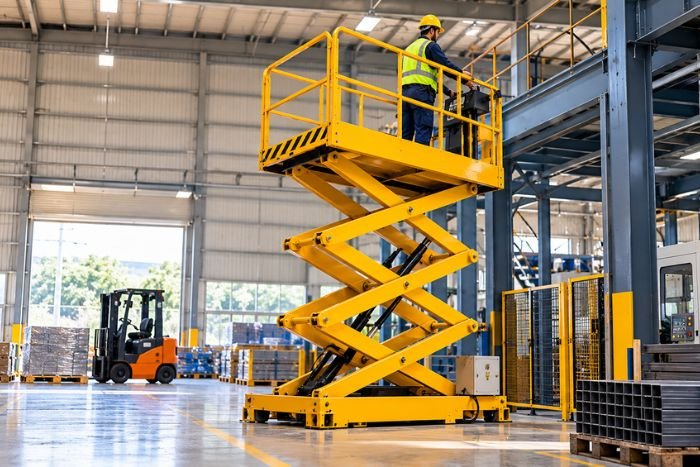
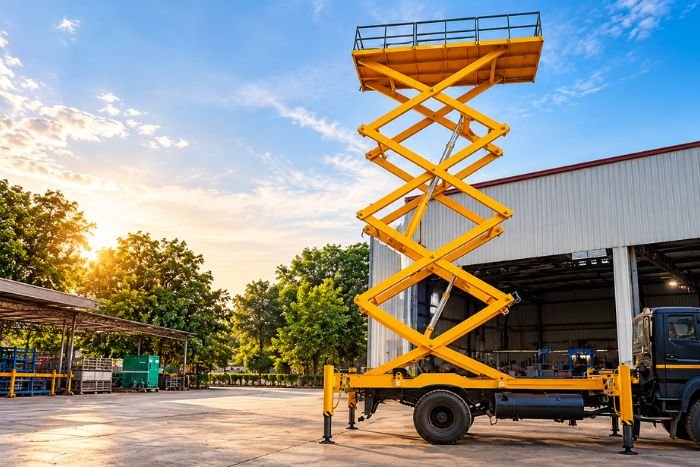
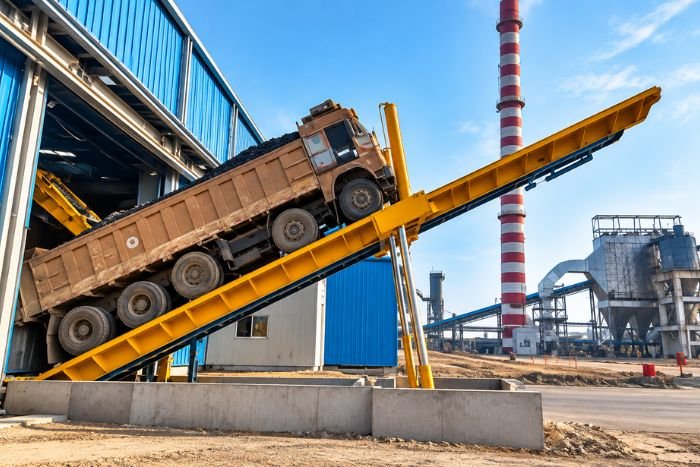
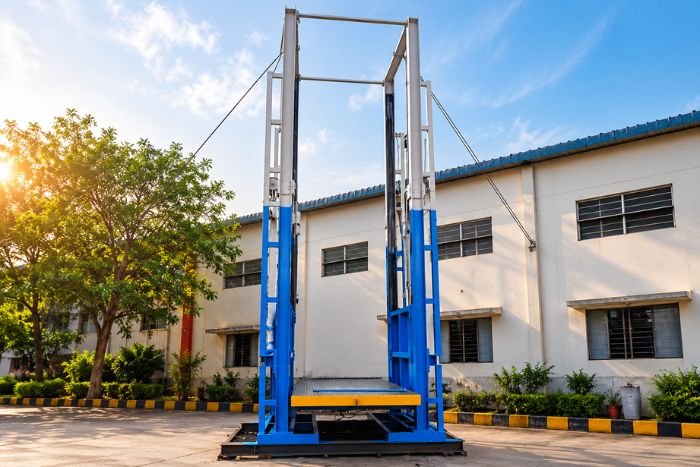
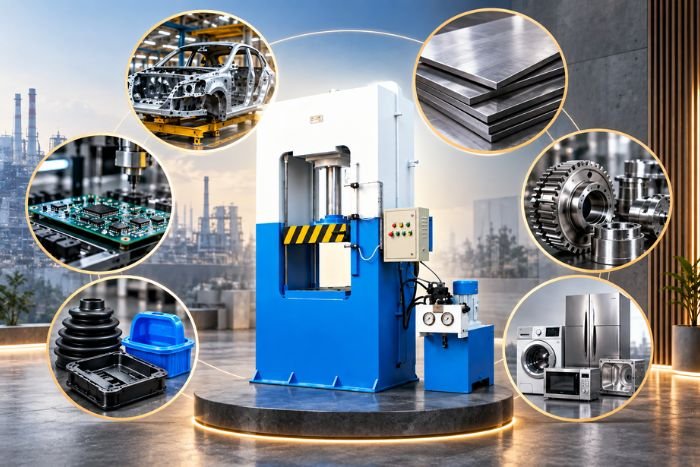
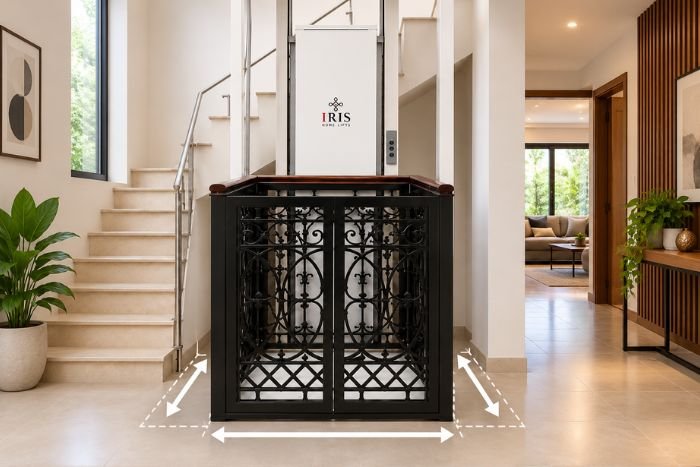
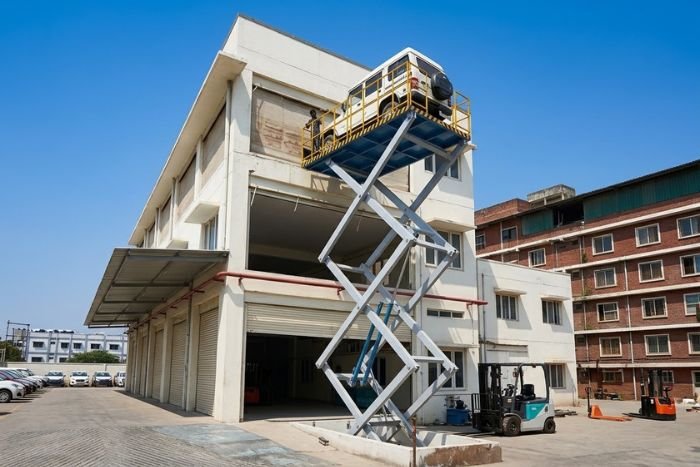
The company also provides other industrial solutions, including Goods Lifts, Scissor Lifts, Hydraulic Presses, Dock Levelers, and Truck Tipplers.
Frequently Asked Questions
What is the main purpose of an industrial stacker?
An industrial stacker is used to lift, move, and position suitable loads, particularly palletized materials, in warehouses and industrial facilities.
Can a stacker be used in a small warehouse?
Yes. Certain compact stacker models are suitable for smaller warehouses, depending on aisle width, load capacity, and working conditions.
How do I choose the right stacker capacity?
Check the maximum load weight, load centre, and required lifting height. Select equipment with a suitable rated capacity for your application.
Conclusion
Choosing an Industrial Stacker Machine becomes easier when you understand your daily material handling requirements.
Start by checking the load weight, lifting height, available space, and frequency of operation. Then compare different models based on their suitability, safety provisions, and maintenance needs.
If you’re looking for industrial stacker solutions in Tamil Nadu, Isha Engineering and Co., Coimbatore, can help you explore equipment options for your factory or warehouse.