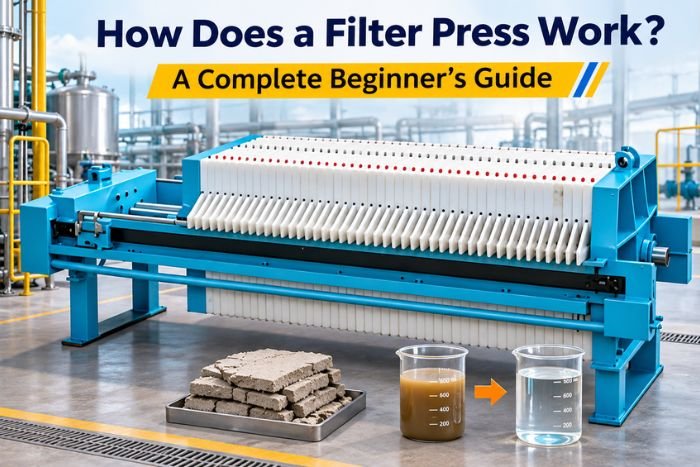
Lots of industries have to deal with liquids that have all this gunk or solid stuff floating in them. They need a way to get the solids out, and that is where a filter press comes in handy. It is a pretty common tool for cleaning wastewater or dealing with sludge and stuff like that. Basically, you just pump the slurry into these chambers between plates. The pressure forces the liquid out through the cloths, and the solids just get stuck and form a cake. If you need one, Isha Engineering and Co. makes them for all sorts of jobs.
What Is a Filter Press?
A Filter Press is an industrial filtration machine used to separate solid particles from liquid.
It consists of multiple filter plates fitted with filter cloths. When the plates are closed together, chambers are created between them. Slurry is pumped into these chambers under pressure.
The liquid passes through the filter cloth and leaves the machine as filtrate, while solid particles remain inside. These solids gradually accumulate to form a filter cak, which is removed after the filtration cycle.
Main Components of a Filter Press
If you want to know how a filter press actually runs, you just need to break down the main parts. First, you have the filter plates which create all the little slots for the filtering to happen, and how many of those you need just depends on the size of the job. Then there is the filter cloth, which is really just a screen that catches the solids while letting liquid flow out. The hydraulic closing system is the thing that clamps all those plates together tightly. A feed pump pushes the slurry into the machine at the right pressure. Finally, the liquid drains out through the outlets.
How Does a Filter Press Work?
So, the way a filter press works is basically just six steps you go through. First off, you need to get the filter plates all shut tight before you do anything. You have to make sure they are lined up right so you have these empty spaces, or chambers, ready for the slurry to go in.
Once that is done, you pump the slurry into those chambers. It goes through an inlet and fills the space between the plates. At this point, it is just a mix of liquid and solids. Then the filtration kicks in. The pressure builds up, and the liquid gets pushed
Different Types of Filter Press
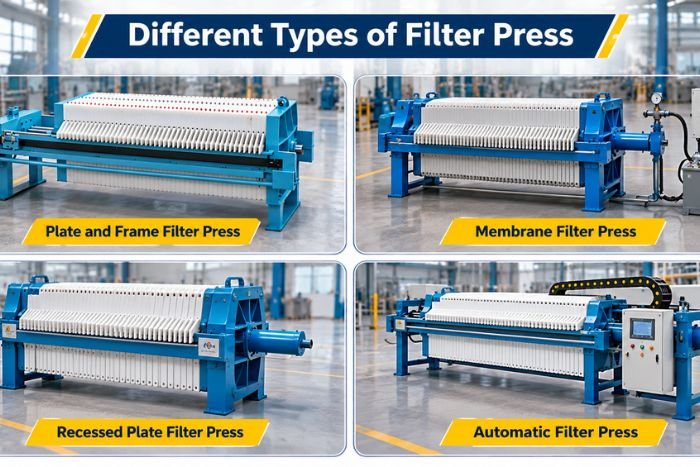
Picking the right filter press basically comes down to how much you need to filter, what the sludge is actually like, how much work you want to do yourself, and what you need the final product to look like. If you want something simple, go with a manual press. You have to move the plates and dump the cake yourself, so it’s a bit of extra work but easier to handle. For bigger jobs that happen over and over, you might want a fully automatic press. It does most of the heavy lifting for you. Then there is the membrane press, which is cool because it squeezes the cake again to get even more liquid out if you really need it dry.
Common Filter Press Applications
You can use a filter press in basically any industry where you need to split solids from liquids. It’s used for all sorts of things like cleaning up wastewater, dealing with sludge, or working with chemicals, mining, food, ceramics, and even medicine. It just depends on what you are actually processing and what kind of result you need at the end, so you pick the right setup.
Benefits of Using a Filter Press
Efficient Solid-Liquid Separation
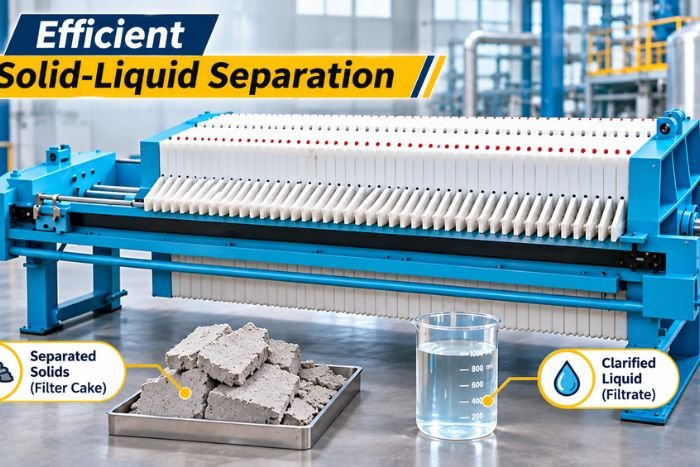
A Filter Press uses pressure filtration to separate suspended solids from liquids effectively.
Filter Cake Formation
Separated solids are collected as filter cake, making subsequent handling, treatment, recovery, or disposal easier depending on the process.
Filtrate Collection
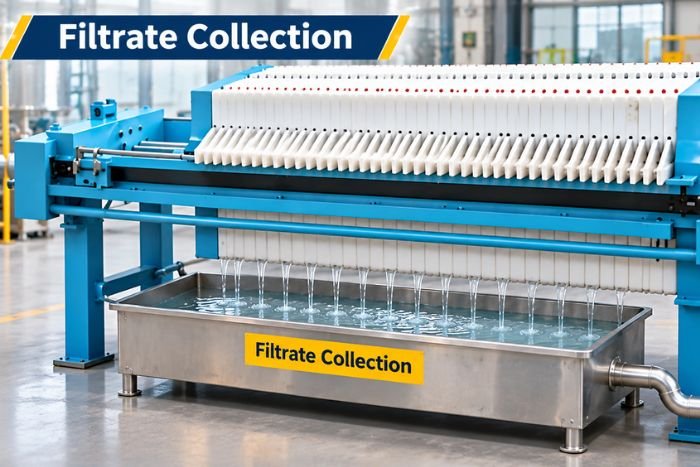
The separated liquid can be collected for further processing, treatment, reuse, or disposal according to the industrial application.
Flexible Automation
Businesses can choose manual or automated Filter Press configurations depending on production volume and operational requirements.
Customizable Configuration
Filter plate size, number of plates, filtration area, controls, and other specifications can be selected according to process requirements.
How to Choose the Right Filter Press
Picking a filter press machine isn’t simple, you really have to get how the whole process works first. You need to know about the slurry, how thick it is, the particles, and what kind of final result you need. There is also the pressure, the space you have, how often you run it, and how much automation you want. Basically, tell the manufacturer everything about your setup so they get the config right.
Filter Press Maintenance Tips
You have to keep up with the maintenance if you want the filters to actually work right. Take a look at the cloths sometimes to see if they are ripped or clogged up. Check the plates too, make sure everything is lined up straight. Keep an eye on the hydraulic parts, valves, and all that stuff, just like the manual says. Watch for leaks or weird pressure drops. If something breaks, get someone who knows what they are doing to fix it.
Why Choose Isha Engineering and Co.?
Isha Engineering and Co. handles all sorts of industrial filtration and hydraulic work. They have a bunch of filter press options, like manual ones, membrane ones, or even the fully automatic stuff. If you run a business and need help, you can just talk to them about your slurry, how much you need to process, or the kind of automation that would fit your setup. They also sell hydraulic presses, lifts, truck tipplers, and other gear if you need that too.
Conclusion
So, how does a Filter Press work? The process is simple to understand: slurry enters chambers between filter plates, pressure forces the liquid through filter cloths, and solid particles remain behind to form a filter cake.
From wastewater treatment and sludge dewatering to chemical processing, mining, and manufacturing, Filter Press machines provide a practical solution for many solid-liquid separation requirements.
For businesses looking for an industrial Filter Press manufacturer, Isha Engineering and Co. provides Filter Press solutions that can be selected according to specific filtration and operating requirements.