When people build a new house, they usually plan everything carefully. Bedrooms, kitchen, staircase, parking space, and even a small pooja room will have their own place.
But a home lift? Many families think about it only after moving in.
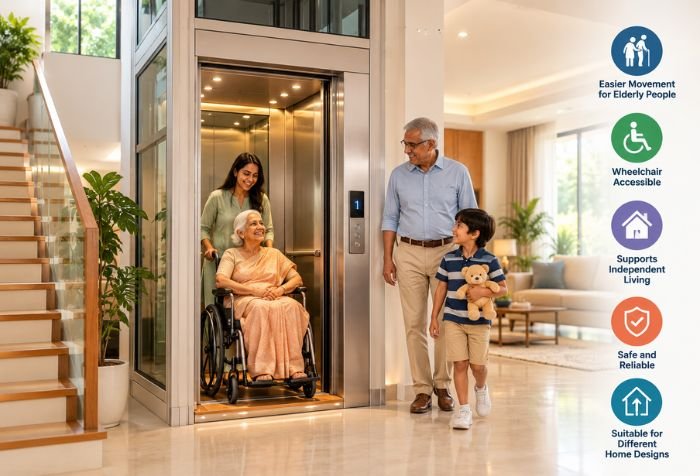
Maybe the parents are getting older. Maybe climbing stairs every day has become tiring. Or the family simply wants an easier way to reach the upper floors.
Then comes the big question. Do we have to break the floor and build a separate machine room to install a lift?
Not necessarily.
Today, certain residential lifts are designed to work without a conventional lift pit or a separate machine room. This is particularly useful for people looking at home lifts in Coimbatore for houses that are already constructed.
Why Do Traditional Lifts Need a Pit and Machine Room?
In many conventional lift systems, a pit is provided below the ground-floor landing. It creates the space required for specific lift components and safety clearances.
Some lift designs also need a separate room for their machinery.
These arrangements are easier to plan when the building is still under construction.
But imagine a family living in their own G+1 house for the past ten years. The flooring is finished, the staircase is fixed, and there isn’t much unused space.
Making room for a conventional lift could involve considerable changes.
That’s one reason compact residential lift designs have become an option worth exploring.
What Exactly Is a Pitless Home Lift?
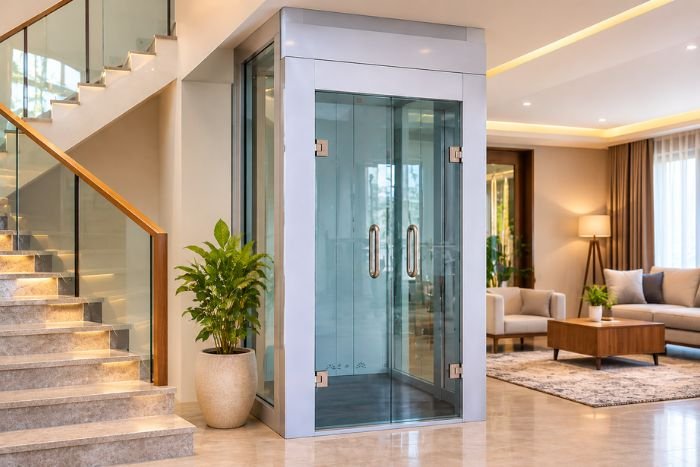
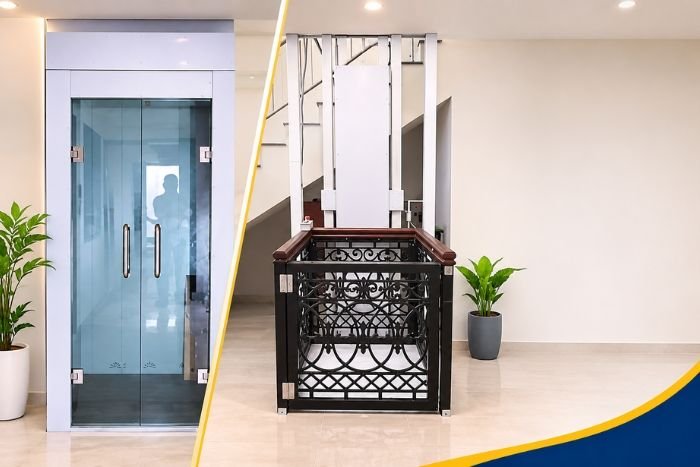
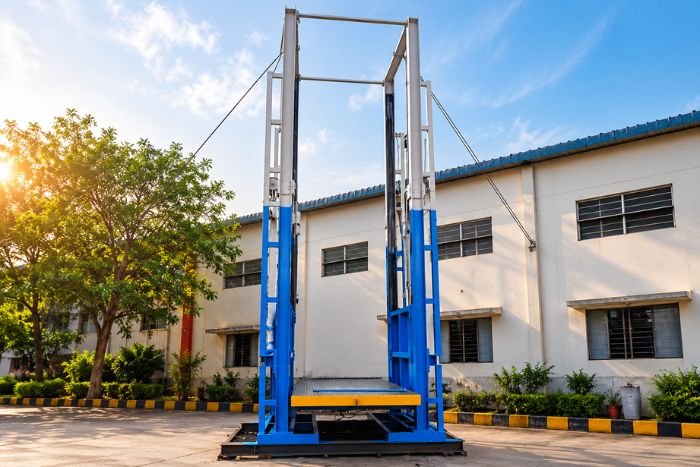
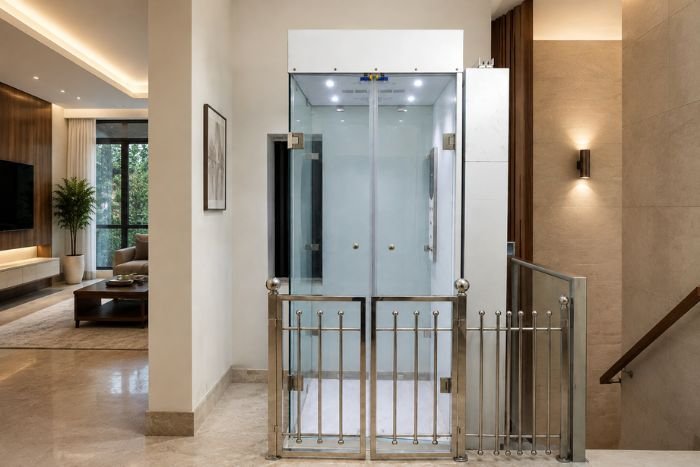
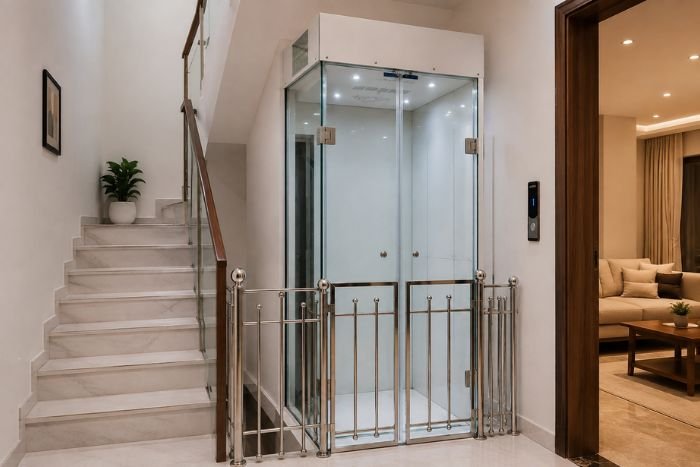
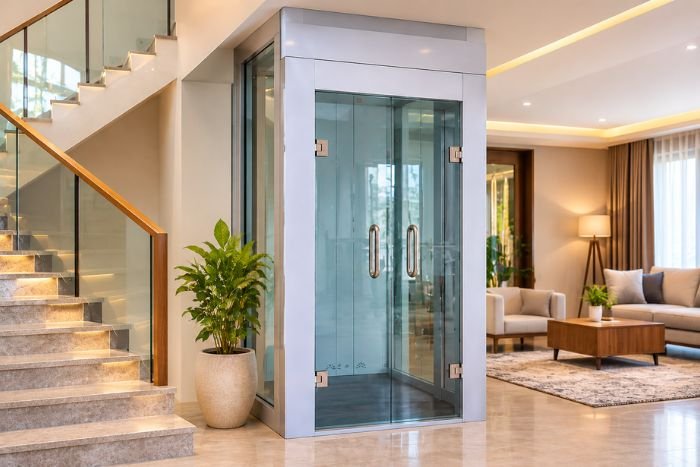
A pitless home lift is designed to operate without the deep pit normally associated with a conventional lift.
Depending on the model, the lift may be installed on a suitable prepared floor, sometimes with a small entry ramp or other floor-level arrangement.
This doesn’t mean installation requires no preparation at all.
The floor must still be suitable for the equipment, and the required clearances must be available.
The advantage is that homeowners may be able to avoid extensive floor excavation.
Is a Separate Machine Room Really Unnecessary?
For certain residential lifts, yes.
A machine-room-less home lift accommodates its drive and control components within the lift system or other designated compact spaces.
Think about a typical independent house in Coimbatore. There may be enough room near the staircase for a compact lift, but no separate room available for machinery.
A suitable machine-room-less design could make installation more practical.
The exact arrangement depends on the lift technology and model selected.
Can You Install One in an Existing House?
In many cases, yes. But the house needs to be checked first.
Two houses may look similar from outside, yet their internal layouts can be completely different.
One may have an open area beside the staircase. Another may have a narrow passage, low ceiling, or structural columns in the proposed lift location.
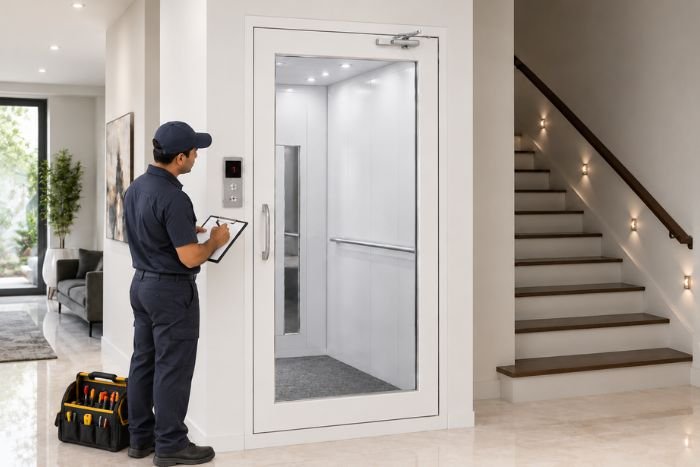
Before installation, the manufacturer should examine the available floor space, travel height, structural conditions, electrical supply, and entry arrangements.
A proper site visit is much more useful than guessing the measurements.
Where Should You Place a Home Lift?
There’s no fixed answer for every house.
Some families prefer installing the lift beside the staircase because it’s easy to reach from each floor.
Others may have a suitable open area elsewhere in the building.
While choosing the location, consider how people will enter and exit the lift. There should be enough room to approach the entrance comfortably.
If an elderly person uses a walker or wheelchair, their movement needs should be considered before finalizing the cabin and door dimensions.
A good location should work for the family, not just fit the machine.
What Makes Pitless Home Lifts Useful for Families?
Less Disruption to the House
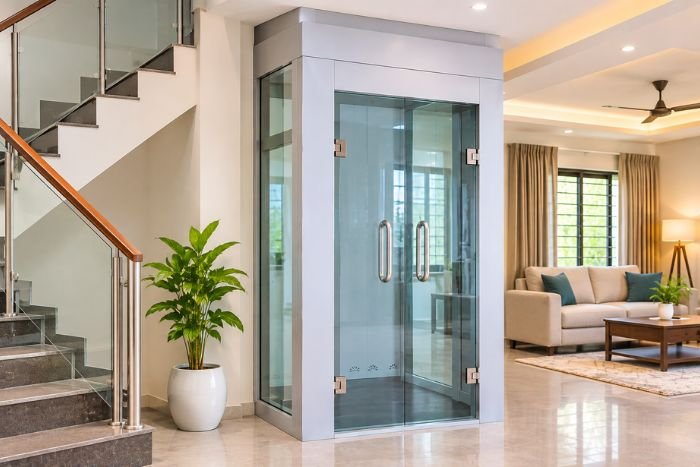
For someone living in a completed house, construction work can be a major concern.
A suitable pitless lift may reduce the need for floor excavation compared with a conventional installation.
No Dedicated Machinery Room
A machine-room-less design avoids the need to reserve a separate conventional machine room.
This can be helpful in houses where every room is already being used.
Easier Movement Between Floors
Carrying laundry, luggage, or household items upstairs is a regular part of life.
A residential lift can make these trips more convenient, particularly for family members who struggle with stairs.
Better Long-Term Accessibility
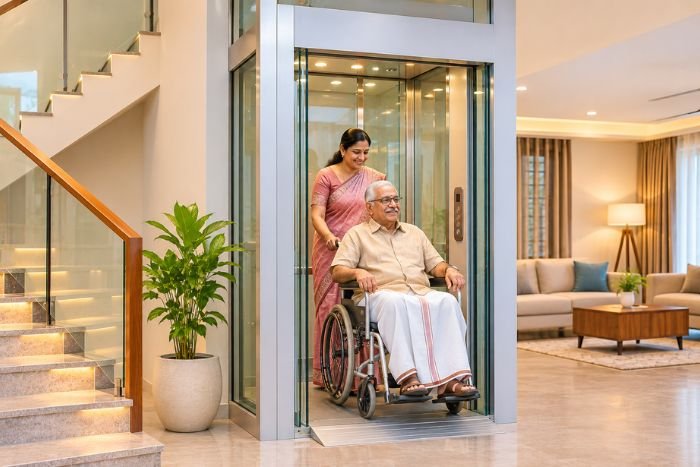
Many people consider a home lift while planning for their parents’ comfort.
It’s also worth thinking about future accessibility needs, even if everyone in the family uses the stairs comfortably today.
Can a Pitless Home Lift Reach Three Floors?
Certain residential lift models are designed for travel between three floors.
For example, a family living in a ground-plus-two-floor house may want access to all three levels.
Whether a particular lift can serve those floors depends on its permitted travel height, installation requirements, and building layout.
It’s important to confirm the actual specifications rather than assuming every compact lift supports the same arrangement.
What About Safety?
A home lift should be convenient, but safety deserves just as much attention.
Before choosing a model, ask how the doors are secured during travel, what happens during a power failure, and how passengers can request assistance.
Depending on the design, safety systems may include door interlocks, emergency stop controls, overload protection, and emergency lowering arrangements.
The equipment should also be maintained regularly and used according to the manufacturer’s instructions.
IRIS Home Lifts by Isha Engineering and Co.
If you’re comparing home lifts in Coimbatore, it’s worth looking at the installation requirements before deciding on cabin appearance or finishes.
Isha Engineering and Co. offers IRIS Home Lifts for residential applications.
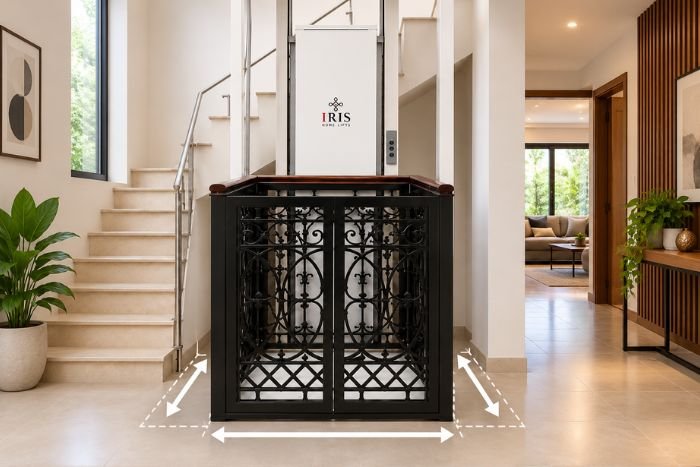
IRIS Home Lifts feature pitless and machine-room-less installation concepts, making them an option for families who want to explore residential lifts without conventional pit and machine-room arrangements.
Configurations are available for homes with up to three floors, subject to the selected model and site conditions.
Homeowners can discuss their floor layout, available space, accessibility requirements, and installation needs with the Isha Engineering team in Coimbatore.
Frequently Asked Questions
Can I install a home lift without digging the floor?
Yes. Certain pitless home lifts are designed without a conventional deep pit. The required floor preparation depends on the model.
Is a machine room compulsory for residential lifts?
No. Machine-room-less home lift designs are available.
Can I add a lift to my old house?
It may be possible. A site assessment is needed to check the building structure, available space, and installation clearances.
Are pitless home lifts suitable for elderly people?
They can be useful for people who find stairs difficult. Cabin dimensions, accessibility, and safety features should match the user’s needs.
Conclusion
A home lift doesn’t always require digging a deep pit or constructing a separate machine room.
For families living in completed houses, modern pitless and machine-room-less designs may offer a more practical installation option.
The first thing to do is check the space available in your house and understand what the selected lift requires.
If you’re exploring home lifts in Coimbatore, Isha Engineering and Co. provides IRIS Home Lift solutions for residential needs.